McMurphy learns he may remain committed indefinitely
One Flew Over the Cuckoo's NestRandle Patrick McMurphy learns he may remain committed indefinitely when a conversation at the Hospital swimming pool exposes the difference between a fixed jail sentence and hospitalization without a known release date. The revelation changes the stakes of his defiance: his six-month sentence at Pendleton Work Farm has an end he can count down to, but the hospital offers no comparable promise. Later, as McMurphy discovers how few patients are committed and how much influence Nurse Ratched has over discharge, his anger turns toward both the institution and the friends who had not warned him of the danger.
The Pool Conversation
By the Wednesday after his arrival, McMurphy has been enjoying the swimming period, but the water is a source of fear for Chief Bromden. Bromden remembers having once been brave around the Columbia River and its falls; after seeing his father become afraid, he too grew frightened, until even a shallow pool seemed dangerous. In the crowded pool, he stays near the side and close to McMurphy, trusting that the staff will not force McMurphy into deep water against his wishes.
McMurphy is treading water in a deeper part of the pool while Bromden can stand on the bottom nearby. Their conversation with the lifeguard begins with a comparison between hospital and jail. McMurphy has been saying the hospital is better, but the lifeguard points to a crucial difference: a jail sentence comes with a date when the prisoner knows he will be released. McMurphy stops splashing, swims to the edge, and asks what happens when a person is committed. The lifeguard offers no definite endpoint.
The lifeguard makes the answer concrete. He is a former professional football player whose injuries and violent impulses have brought him to the Disturbed Ward, though he serves as a lifeguard at the pool. He describes a nurse who tells him his arm is being cured in secret and that, if he protects it, he may return to football. McMurphy asks how long he has been waiting to be told he is well enough to leave. The lifeguard insists that he could at least have folded towels, but says the nurse keeps telling the doctor he is not ready. He was picked up for being drunk and disorderly and has been in the hospital for eight years and eight months.
That history gives McMurphy’s question its force. A patient can be given a task, kept under treatment, and still have no date for release. The lifeguard’s account does not establish that McMurphy will be confined for years, but it destroys the assumption that his stay must end when a known sentence runs out. Afterward, McMurphy swims to the shallow end and sits frowning through the rest of the period. Bromden watches him and begins to feel afraid.
A Sentence Without an End Date
McMurphy has served two months of a six-month sentence at Pendleton Work Farm and expects four months to remain. He has already spent close to a month in the hospital. Its good beds and orange juice may make it more comfortable than the work farm, but, after hearing the lifeguard, he recognizes that comfort cannot compensate for the possibility of remaining there for years. His immediate calculation is practical: four more months is the longest he wants to spend locked up anywhere.
The prospect recasts his earlier challenges to Nurse Ratched. McMurphy later explains that he asked around and discovered that antagonizing her could risk prolonging his confinement. He had assumed the patients’ appeals for help with ward grievances reflected shared opposition; now he sees that they had encouraged him to take risks whose consequences would fall especially heavily on him. He says he wants out as much as they do and has no reason to keep confronting the nurse on their behalf if doing so endangers his own release.
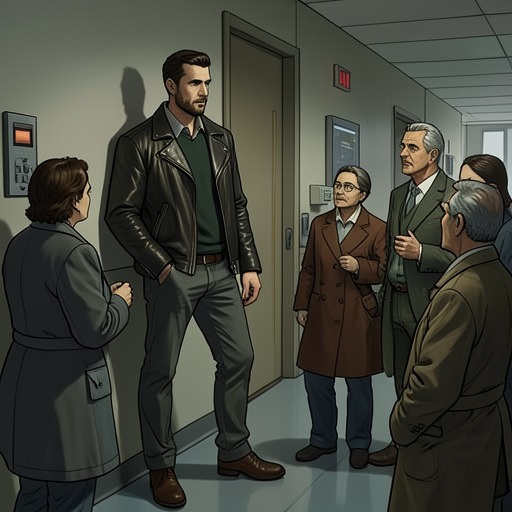
The patients’ different legal positions sharpen the discovery. Dale Harding tells McMurphy that he is a voluntary patient, not committed. Harding adds that only a few men on the ward are committed, including Scanlon, some of the Chronics, and McMurphy. McMurphy struggles to accept that he may be the unusual case: the men around him can potentially choose to leave, while his own release is not simply his decision. His sudden suspicion that the others have misled him is not resolved by reassurance; the men do not argue with him.
Ward Rules and the Power to Discharge
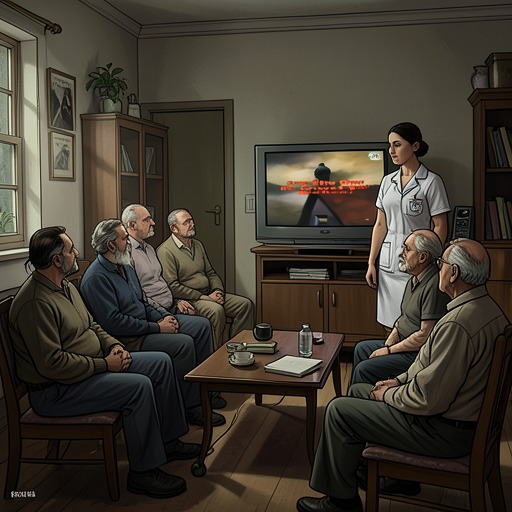
McMurphy’s fear takes shape against a ward where formal procedures can appear democratic while leaving authority in management’s hands. In a policy vote, Nurse Ratched counts twenty votes among forty patients, declares the proposal defeated, and closes the vote because a majority is required to change ward policy. When McMurphy protests, she remarks on how upset he seems and asks the doctor to note it. The exchange shows how dissent can be recorded as evidence about a patient rather than treated as a challenge to the rules themselves.
The possible penalties for open resistance also have a history on the ward. Fredrickson warns that telling Nurse Ratched to go to hell can get a patient listed as Potential Assaultive and sent upstairs to the Disturbed Ward; he says this has happened to him three times. He describes patients there as unable even to leave the ward for a Saturday movie or watch television. Harding adds the prospect of the Shock Shop and possibly an operation. These warnings do not prove that McMurphy will receive any particular punishment, but they clarify why the patients weigh resistance against the power to classify and transfer them.
McMurphy’s own account of what he learned is explicit: the nurses have a major say in who is discharged, and Nurse Ratched can keep him committed until she is ready to release him. He had not understood that the patients who sought his help were exposed to a different risk from the one he faced. Harding’s voluntary status makes the distinction especially stark: the same ward can hold patients who have options McMurphy does not.
The Discovery’s Human Cost
McMurphy’s blunt challenge to the other men brings the difference into the open. He asks Billy Bibbit whether he is committed and presses other patients about why they remain hospitalized. Billy breaks down in tears and explains that he could go outside that day if he had the courage. His mother is a friend of Nurse Ratched, and he says she could obtain an AMA form for him. The obstacle he describes is not the absence of a possible route out, but his fear of facing the outside world and of being laughed at.
Billy tries to pull on his shirt, but he is shaking too hard and throws it away. He protests that he wants an ordinary life, including a car and a girlfriend, and insists that McMurphy’s size and toughness do not make the others equally capable of leaving. As he cries, he wipes his eyes with the backs of his hands; a scab comes off, and he smears blood across his face and into his eyes. He runs blindly down the hall, with a black attendant following him. His outburst exposes the mistake in McMurphy’s assumption that patients stay because they prefer the ward: a formal possibility of departure does not erase fear, vulnerability, or dependence.
McMurphy’s response is markedly subdued. He begins to question the men further, then stops when he sees their fixed attention. He returns to his place on the bench, pulls his cap down, and sits looking toward the treatment-room door as the technicians return from coffee. His uncertainty remains visible; he says he cannot get the situation straight in his mind. The scene does not settle whether he will submit to ward policy or resume his opposition. It establishes instead that resistance has acquired a personal cost he had not understood.
Significance
The episode turns commitment from an abstract status into a problem of time and decision-making. A prisoner may know how long remains on a sentence; McMurphy learns that his confinement may have no scheduled conclusion. The lifeguard’s eight years and eight months supply a concrete measure of that uncertainty, while Harding’s voluntary status and Billy’s possible AMA form reveal that the patients do not share one path to release.
The discovery also complicates McMurphy’s role as an advocate. His challenges have helped patients contest ward rules, but he now understands that he may be paying a different price for those confrontations. The institution’s power works through more than explicit punishment: it also lies in control over discharge, transfer, treatment, and the interpretation of a patient’s protest. McMurphy’s changed calculation is therefore not simply a loss of nerve. It is recognition that the apparent community of shared grievances contains unequal exposure to the ward’s authority.